
Search Ashland County Property Records
Ashland County Property Records are built for real searches, not just quick clicks. If you need a deed, a tract index, a parcel map, or a tax check, the county gives you several ways to find it. The Register of Deeds office in Ashland and the county GIS tools work side by side, so you can move from a name search to a parcel search without losing the thread. Older files can take a little more patience, but the county has a clear path for that too. Start with the county portals, then move to the office that holds the detail you need.
Ashland County Property Records Search
The county seat is Ashland, and the main office for land records sits in the courthouse at 201 W. Main St., Room 206. That is where the county keeps the record trail for real estate documents, public access, and certified copies. LandShark is the county's online search system, and it gives you images from 1860 to the present. The index goes back to 1950, and the tract indexes help with pre-1950 work. That makes the county useful for both newer title checks and older chain-of-title questions.
If you are using Ashland County Property Records for a land search, the office can help you move from a scanned document to the older tract index when needed. That matters because not every question is answered by the latest deed. The county research says the office will also direct users to the proper search route depending on whether they need a copy, a history check, or a parcel lookup. The office does not draft deeds, and it does not change legal documents for you. That keeps the line clear between records help and legal advice. The county also points people to interactive web maps and the county GIS portal when a parcel check is the faster route.
The county's GIS and open data pages are part of the same search flow, and the open data site at data-ashlandcountywi.opendata.arcgis.com helps you connect the recorded document to the parcel itself. When a name search and a map search match, the records story becomes much easier to follow. That is the practical value of Ashland County Property Records. They are not just a file cabinet. They are a working system for land history, tax detail, and parcel review.
Ashland County Property Records Office
The Register of Deeds office records deeds, mortgages, plats, certified survey maps, federal tax liens, and other authorized writings. The county research also notes that documents received after 3:30 PM are processed the next business day. That same-day cutoff is important if you are rushing a filing. Wis. Stat. § 59.43(2m) covers the standard document format, so the paper has to meet state rules before it goes in the book. The office records are not a loose archive. They are an official county repository with clear rules.
Ashland County also follows the state transfer fee system and the electronic transfer return process. The research notes a transfer fee of $3.00 per $1,000 of value for non-exempt conveyances, and the return must go through the Wisconsin Department of Revenue's eRETR system. That keeps the county transfer file tied to the state record. If you are checking a deed, a transfer, or a fee question, it helps to look at the county page and the state DOR page together. The county is where the document lands, but the state rules still shape how it is filed. The transfer fee rules are also laid out in Wis. Stat. § 77.22, with exemptions in Wis. Stat. § 77.25.
The office is also tied to property fraud protection. Ashland County has a free land notification service that can monitor a name or parcel number and alert you to new recordings. That is a smart step for owners who want a heads-up if something odd shows up. It does not replace a full title review, but it does add a useful layer of watchful eyes. For many residents, that is one more reason to keep the county records page bookmarked.
Ashland County Property Records Maps
The main Register of Deeds page at ashlandcountywi.gov is the key place to start when you need the local real estate record rules in one place. You can also compare it with the county land information and tax pages at co.ashland.wi.us/departments/land-information and co.ashland.wi.us/departments/treasurer.
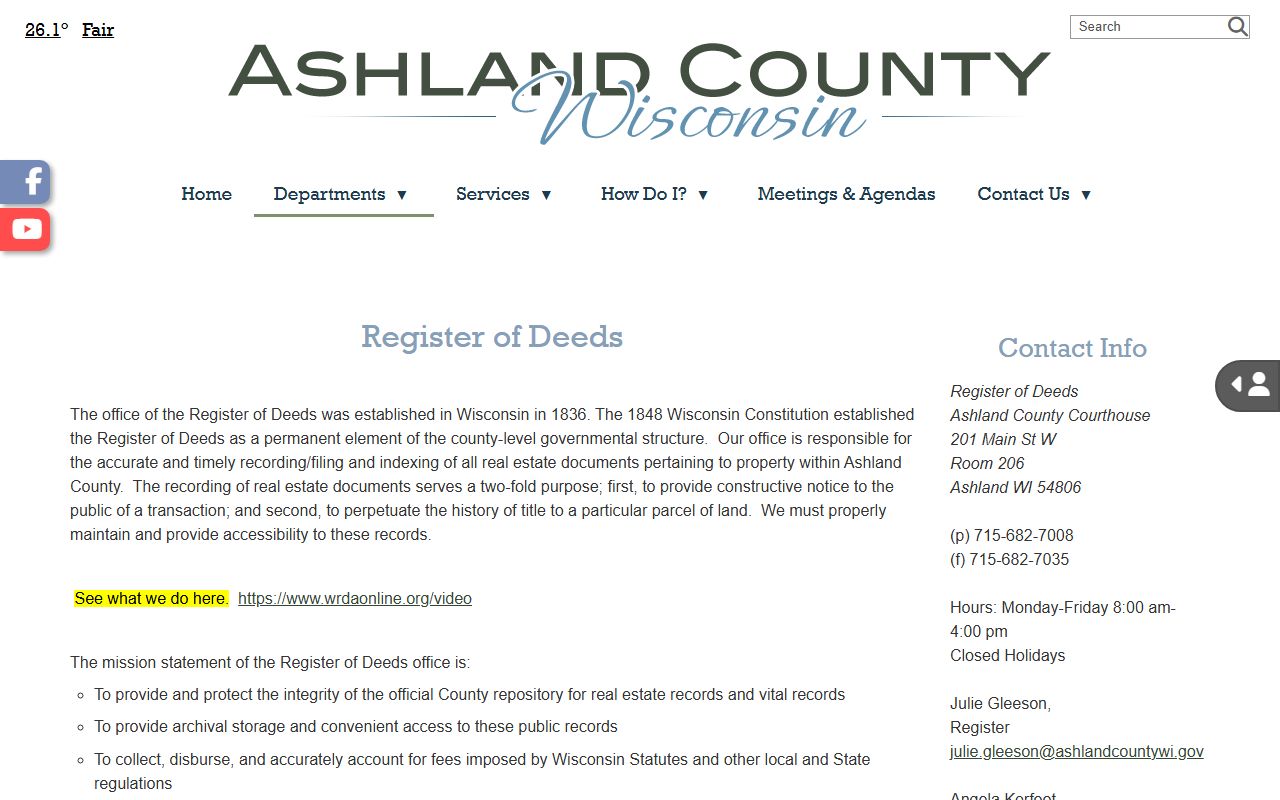
That page is where the county explains document handling, format rules, and the office role in the public land record system.
The county's open data portal at data-ashlandcountywi.opendata.arcgis.com gives you another way to work with Ashland County Property Records. It is especially useful when you want parcel data and map layers together. The county's interactive web map page at co.ashland.wi.us/interactive_web_maps is another route into the same parcel view.
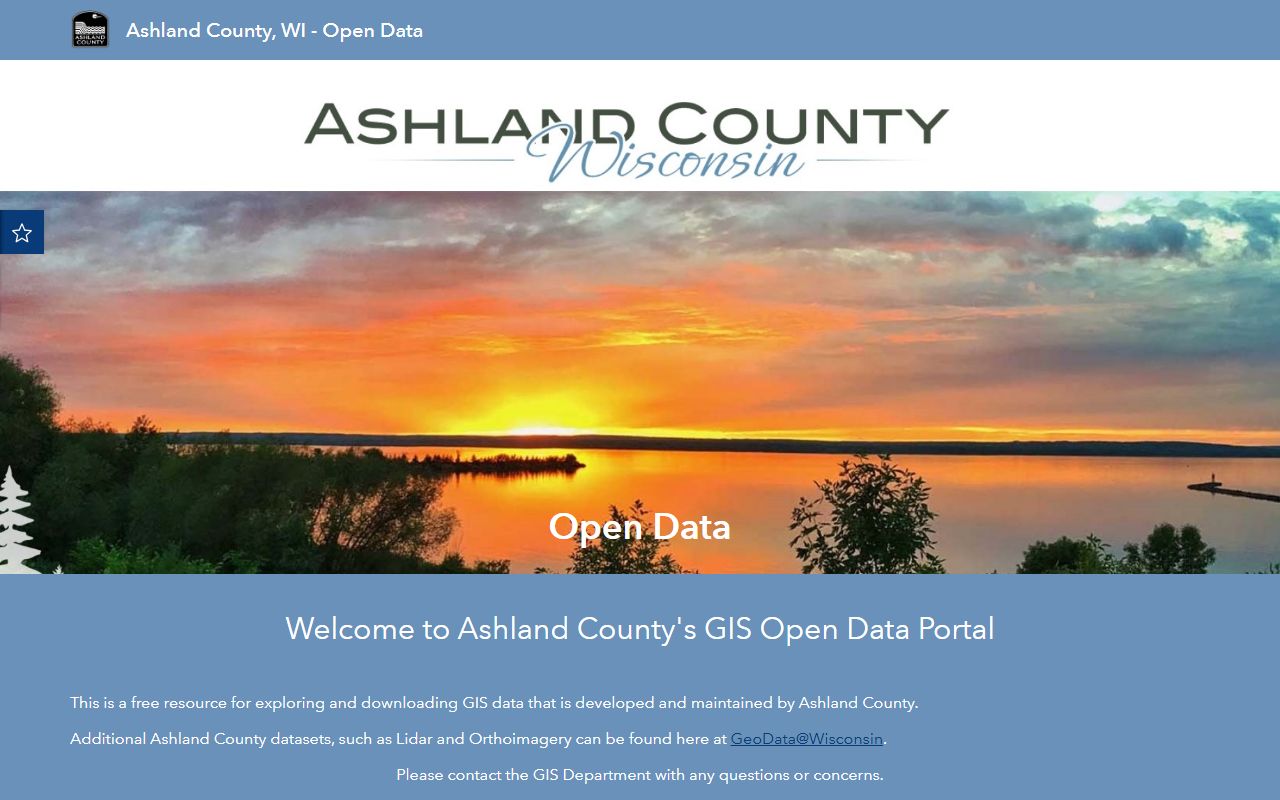
That portal supports broader research because it turns parcel data into something you can inspect and compare, not just read.
The county assessment information page at ashlandcountywi.gov/assessment_information helps with tax and value context. The page also connects the property record to local assessment rules and appeal paths.
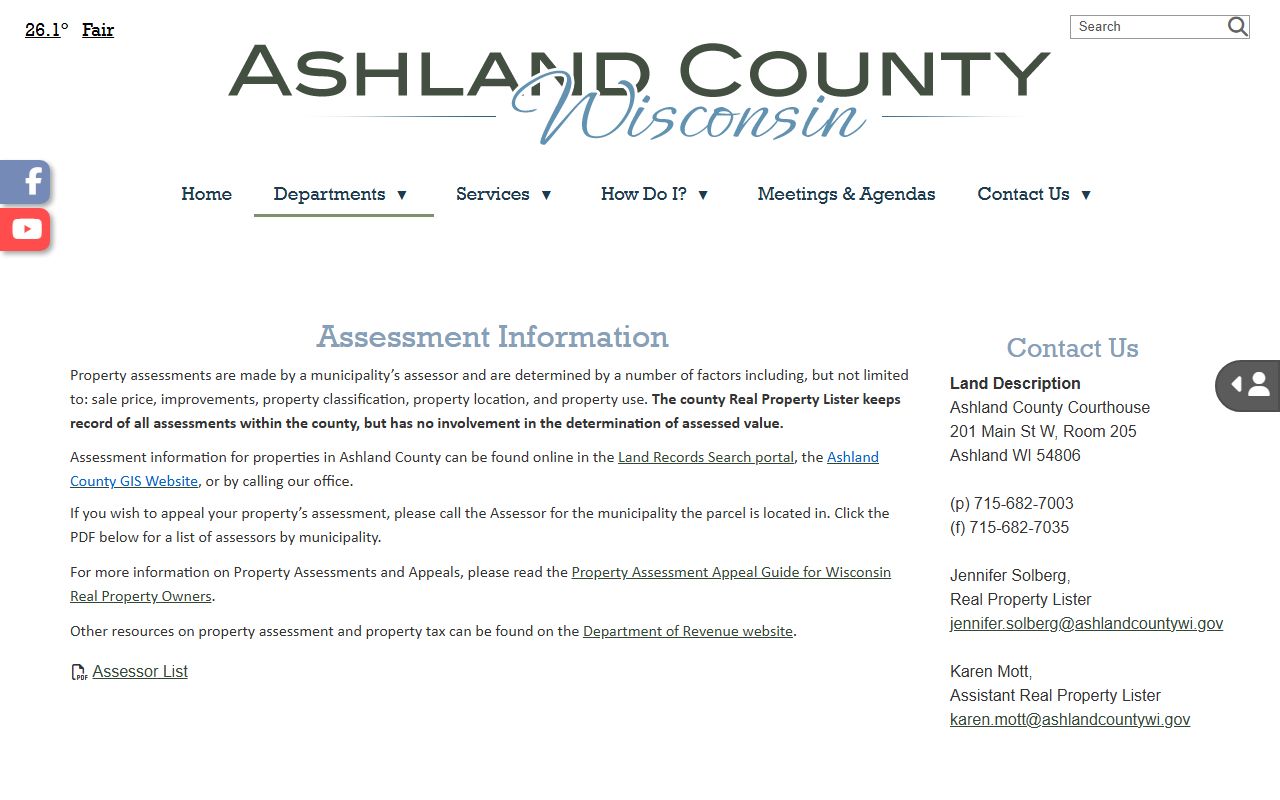
That is useful when a deed, parcel, and assessment do not line up the way you expected.
The county register page at ashlandcountywi.gov/register_deeds gives another local path into Ashland County Property Records, and the county WRDA profile adds a statewide association view of the same office.
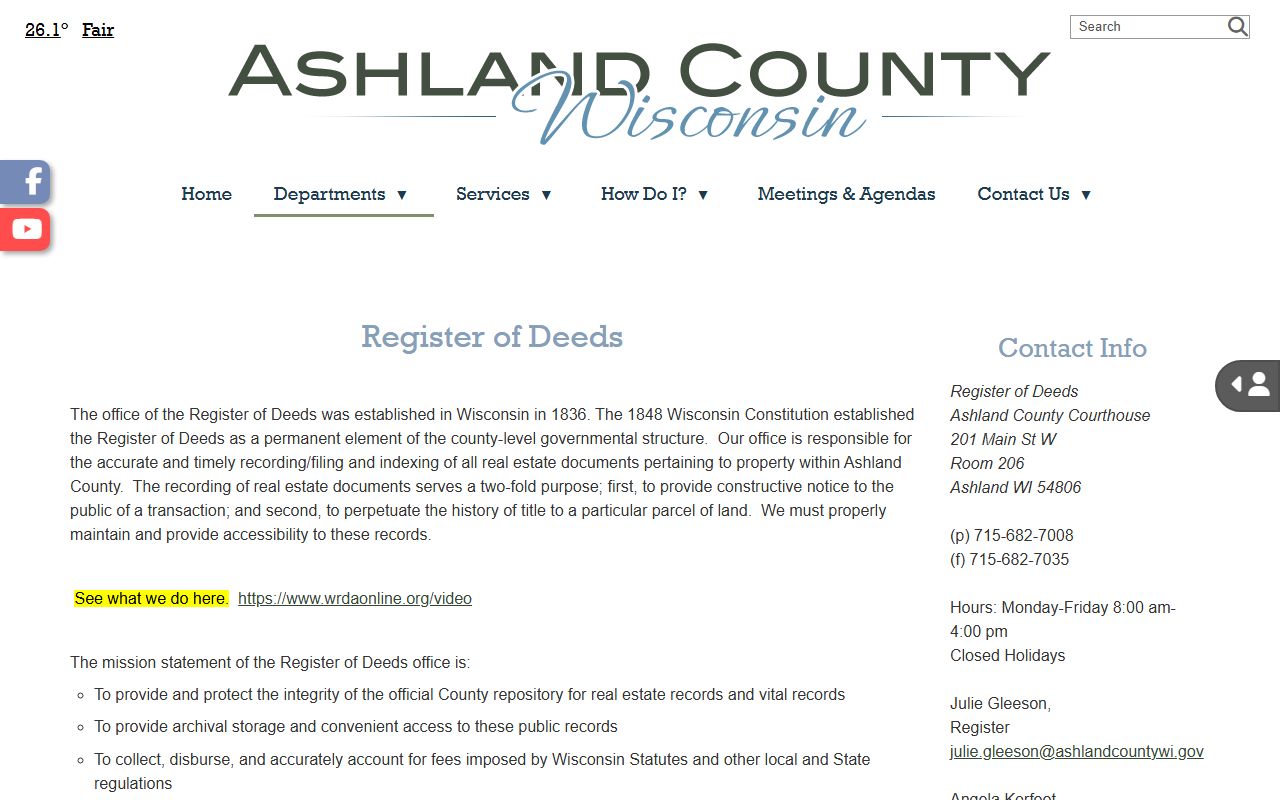
That office page is handy when you want to confirm contact details or understand the office structure before you visit.
The WRDA county profile at wrdaonline.org/ashland-county closes the loop with a statewide reference point for the same office.

That profile is a good cross-check when you are comparing county access with statewide records practice.
Ashland County Property Records Fees
Ashland County uses the state recording fee rules, and the deep research adds the local detail that the recording fee is $30.00 per document. Copy fees are $2.00 for the first page and $1.00 for each additional page. That fee structure is simple on paper, but it matters in real work because a document search, a certified copy, and a map pull can all cost different amounts. The office also notes the daily cutoff, so a document brought late in the day can shift to the next business day even before fees are counted. The county register page and the LandShark login are the two direct local tools most users touch first.
The county transfer fee is another part of the cost picture. Under Wisconsin law, the real estate transfer fee applies at $3.00 per $1,000 of value for non-exempt transfers, and the department of revenue transfer return is the record that ties the deal together. If you are checking a sale, a deed, or a land contract, that fee and return trail can help explain why one parcel record looks different from another. Ashland County Property Records are easiest to read when you keep the fee rules and the filing rules in the same view.
Tax and assessment records also carry their own practical costs, mostly in time rather than dollars. The county treasurer at co.ashland.wi.us/departments/treasurer and the real property lister can help you track values, appeals, and tax timing. The research says the county tracks roughly 21,298 parcels, 20,946 matched structures, and standardized zoning data for most parcels. That scale helps explain why the county uses both office staff and GIS tools to keep the records current. The more complete the parcel picture, the less likely you are to miss a detail in a title search.
Ashland County Property Records Help
If you need help with Ashland County Property Records, the county and state tools give you several backup paths. The county GIS pages include interactive web maps and a land notification service at co.ashland.wi.us/gis. The statewide Department of Revenue site at revenue.wi.gov supports the eRETR process and property assessment reference material. Those tools help when a deed search is only the start and you still need to follow the parcel to tax or value records.
The Wisconsin State Law Library and the Legislature's statute pages are useful when you need to understand why a document was accepted or rejected. Wis. Stat. § 706 covers conveyances and title rules, while Wis. Stat. § 59.43 governs recording basics. Wis. Stat. § 77.265 keeps transfer returns confidential, so some details will not be open to the public even when the deed itself is. That distinction matters. A public deed search does not mean every transfer field is open for display.
Ashland County also gives you a practical reminder to use the right source for the right question. The Register of Deeds office can provide records and copies, but it cannot draft deeds or fix legal language for you. For older searches, the tract indexes and LandShark images fill the gap. For newer work, the GIS and assessment pages help confirm the parcel picture. That mix is what makes the county records system useful for both owners and researchers.